Archive for April, 2011

Thule’s Revenge Day 5 FFF 2011

April 13, 2011

Robert Scott Wildes Reporting For Duty And Ready To Do Battle!

Unable to peel myself away from the office on time, Number One Son and I arrive to the International Documentary Shorts late and completely miss Tussilago, the first film.  After settling in, however, we find these to be the best set of shorts we’ve seen yet. Here’s a brief review:
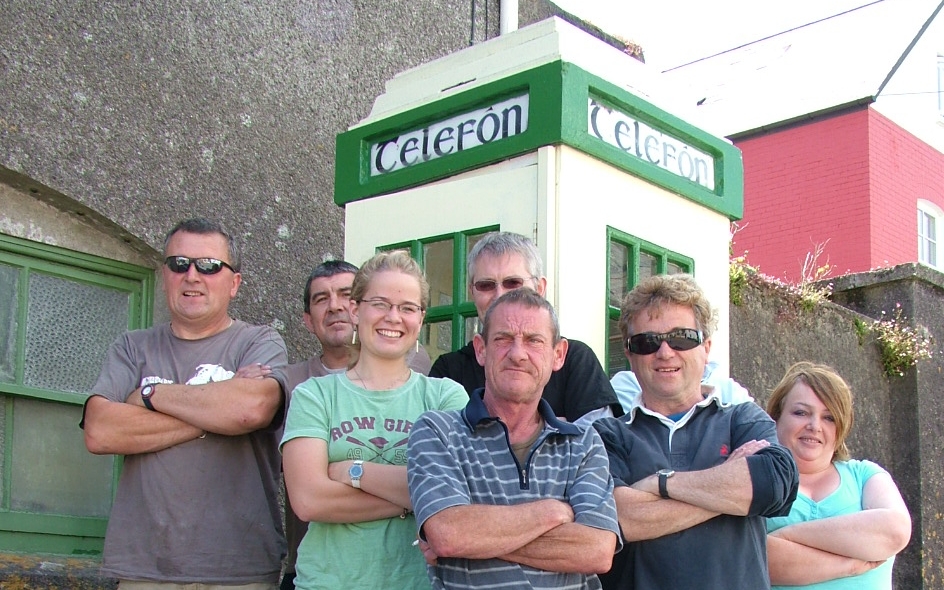
Some Folks Wouldn't Let Them Go!

Bye Bye Now! – When you lose someone or something how much will you miss it? What if you live in Ireland and the something you’re losing is your local, public Telefone box? A great short that thoroughly explores this unexpected issue. It even includes a poignant love story!

Grandpa’s Wet Dream – If your 76 year old Japanese grandpa wanted to become the lead in porn movies, would you want to portray his cinematic legacy during his funeral? Watch this short and think about that.

Bathing Micky – A daily dip in the sometimes frigid Swedish water helps an old woman find meaning in her declining years.

Face – Did the subjects of this Australian documentary belong here or in the restaurant where Harry met Sally? Sorry, but if you don’t understand that reference, I’m not going to explain it to you.

On the way out of the theatre, I encounter Eve Benson and ask her what she thinks of the films. “I liked them all, I gave them all a five,” she replies, “I don’t always do that.”
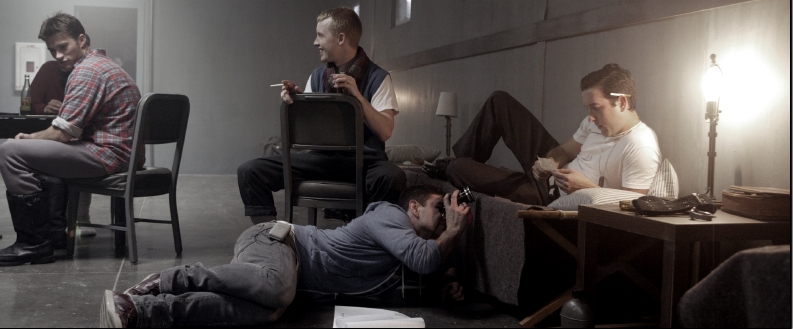
Robert Directing A Scene

As soon as the International Shorts program is finished, Matt from the FFF walks into the theatre with Robert Scott Wildes. After the Phase Cancellation debacle of Day Two, they’re not taking any chances. They’re doing a tech check for Thule. Upon hearing his film, Robert gives Matt the thumbs up.  The sound is working this time.

Robert wants to know if it’s a one flat control or are there sub controls. “Don’t go there,” chides Matt.  They don’t want to press their luck.  By the time Matt walks down the theatre aisleway, he is already busy on the phone attacking the next issue.

Meanwhile, I interview the patrons waiting in line to see Shorts Program 2. “I see them all, all the time,” says Grey Squires-Binford who is here with Michael, her husband. They both have platinum passes. They heard about the issues with Thule’s sound the first time it played. “It’s very disappointing. Something like that seems to happen with filmmakers every year,” laments Grey.

“I think it’s a format issue,” chimes in Michael, “so many things are shot in different formats. To be able to reproduce them all, that can result in bad sound. They do try, as best they can, to fix it,” he acknowledges. “My wife has been going to the FFF for 17 years, I’ve been going for 9.” Michael says he particularly likes the Enzian Theatre and enjoys good independent films. He especially likes the shorts programs.

I catch up with Robert Scott Wildes outside the theatre and ask him what he’s anticipating with today’s showing of his film, Thule. “I’m anticipating the audience hearing the narrative, which will be nice,” he says in a semi-joking, semi-serious tone.  “I ran into a woman who saw the film the first time. She, like a lot of people, thought it was a choice to not have dialogue.”

“Actually, It was a polarizing experience.  On the one end, you want to stop the film. On the other end, it was an exercise in seeing a film without the dialogue.”  He goes on to talk about David Mamet’s book where Mamet recommends that you screen the movie, once it’s completed, without the dialogue. Robert goes on to explain how this applies to his film, “People learned a lot—sonically, it felt like you were on a different planet. It was interesting. People saw nuances in the actor’s performance.” While talking with me, he wrings his hands and his foot thumps constantly. He’s clearly nervous, but does not want to admit it.  He pauses for a moment to check his phone for text messages.

While I’m speaking to Robert, an older man walks by and mistakes me for the ticket taker. He attempts to hand me his ticket. After jokingly thanking him for the free tickets, I ask him if he’s seen Thule and does he know the filmmaker? He says he does, so with Robert sitting right beside me I tell the older man if he sees the filmmaker, could he kindly ask him to sit down with me for an interview. Later, I discover that the gentleman I met is Robert’s father.
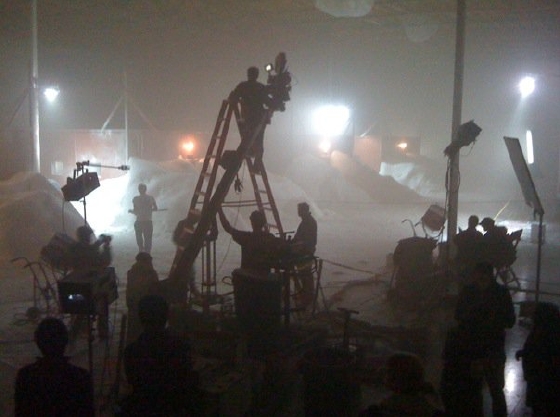
Setting Up A Crane Shot For Thule

I ask Robert if he’s seen his movie with an audience before tonight. He says only two or three times. “It was shot for a movie theatre, it wasn’t shot for a laptop,” he points out. “I’m really excited to see it with dialogue and sound. So many people make movies for YouTube,” he concludes, noting that his movie was made for the big screen. At this point he excuses himself so he can go get a seat inside the theatre.

Since Thule doesn’t run until an hour into a shorts program we’ve already seen, Number One Son and I decide to pop over to Austin’s Coffeeshop for a quick bite to eat during the first part of the shorts program.  We rush the meal because I want to be back in time to see how the audience responds to Thule.

As we re-enter the theatre, we run into Robert standing in the aisleway entrance. He’s pacing like a animal trapped in a cage. He’s strung very tight and it feels like he’s about to burst. As we watch the remaining shorts, he’s continually making editorial comments in my ear—“You know what’s wrong with this scene? The kid’s backpack is too new. There’s no dirt on it…The director holds this shot too long…Notice how the piece of paper crinkles here, they should have reshot that scene…” It’s clear Robert’s a perfectionist. I have no doubt he’s even harder on himself and his own films then he is on others.

Finally, Thule is the next film. Robert takes his seat near the front of the theatre, right beside his father. I notice his father giving him a gentle rub on the shoulder with a closed fist. It’s a tender moment. Silence descends.

As the opening credits roll, Robert jumps out of his seat and over to an FFF staffer. He asks her to increase the sound volume. He will do that two more times during the course of the movie.

As the movie continues to play, I notice the vast improvement of watching the film on the big screen instead of on my TV at home. Like the iconic director David Lean’s films, Thule needs to play on the big screen.

The audience is entranced. No one is moving, coughing or looking at their watch during the entire movie—particularly Robert. Among all the theatre patrons, he stands alone in watching the film with stark intensity; absorbing every moment. If this were my movie, my attention would be with the audience. Do they like it? Are they engaged? Not Robert. He doesn’t take his eyes off the screen during the entire movie, except to ask the staff to raise the volume level again.

The final scene plays out and the credits begin to roll. Nobody in the theatre moves. It’s a good sign. There’s a generous amount of applause as the credits end.

A few patrons walk out before the Q&A. I pointedly ask them if they liked Thule. It gets overwhelmingly positive praise. One young lady admits that the movie had her in tears (and she looks like it.)

Robert is the only filmmaker for the Q&A session. There are the typical questions about costs, scripting, production details and so forth. As the questions continue, the praise becomes more emphatic and undeniable. The film is compared to a feature. Two times the audience breaks into spontaneous applause during the Q&A.

I’ve lost all journalistic objectivity. I’m so happy for Robert. What happened to him three days ago was nothing short of a tragedy. While the remaining patrons leave the theatre, several people congregate around him. One young woman casually flirts with him as she asks him if she can send him her resume. A Disney employee gives him his detailed schedule for the week–offering him free access to the theme parks. Most just give him justifiable praise.

Finally the room is clear and the paparazzi have all dispersed. All except for Number One Son and I. Robert breathes a sigh of relief and comes over to speak with us.

Ever the perfectionist, he is ragging about the sound quality. “It could have gone up five decibels,” he laments. Number One Son asks him if the sound was muffled. “The problem is that the dialogue is supposed to be coming from the front of the room and the rest of the sound from the sides,” he says, gesticulating widely with his arms to make his point nonverbally as well. He also complains about several other production elements. It’s no wonder he’s so good—he’s a meticulous and driven filmmaker. I can identify. I wince as I note that the film takes place in Greenland, but on my previous post I referred to it as occurring in Iceland.

As he grows a little calmer, Robert kids Number One Son about describing him in the other day’s blog post as looking like Ron Livingston. He gives a hearty laugh as I make fun of the way he mercilessly ragged on the movies previous to his. His nervous tension is beginning to abate and he’s just beginning to let this FFF experience sink in.

After all, this is what the film festival is really all about.  And it’s fun.  And it’s magical.

But don’t take my word for it. Robert promised he would read this blog and make a comment. So I will end here and await for Robert to continue the conversation below. After all, the conversation is really what this blog is all about…

Robert?

Number One Son Reviews 13 Assassins – Day 5 FFF 2011

April 13, 2011

Gory And Over-The-Top

[Editor’s Note: I couldn’t be more excited to announce the introduction of another new LanceAroundOrlando Journalist–none other than our very own Number One Son makes his blogging debut with tonight’s review of 13 Assassins. Welcome to the LanceAroundOrlando Team, Number One Son!]

  “Number One Son” here. So we saw 13 Assassins, a gory homage to Seven Samurai, courtesy of Takashi Miike. Also it probably homages some other Samurai films. I dunno. I haven’t seen that many to be honest. Anyway at the beginning of the screening the announcer warned us that some people think it’s slow in the beginning. But then he said something like don’t worry,  it gets awesome once the epic 45 minute battle scene starts. No, turns out that part is boring too!

Maybe I’m weird. The audience seemed really into it. (Except for LanceAround who started snoring in the middle of the movie.) Nevertheless, I think the music and cinematography are both way too dreary for such an over-the-top movie. Also since, alas, we are living in 2011 the battle scenes are much harder to follow than they should be. But I think the main problem with the film is: I didn’t connect with any of the characters. They’ve got no personality.

I have this theory that it’s just really hard to write good characters when you know everyone is going to die a horrible death. How can you pour your heart into a character when he’s cannon fodder? (Of course there are good movies/characters where everyone dies. Seven Samurai for example! Also it’s been a while since I’ve seen it, but I remember Hamlet being pretty good.)

Anyway I wonder if you’d get better results if you told a writer to write a samurai movie where nobody dies, and then when he’s done, you say “oh, sorry did I say nobody dies? Ha ha ha did I really say that? Oh man! I meant everybody dies! Go ahead and rewrite the last third of the film, would you?”

Holy Wars – Day Four FFF 2011

April 12, 2011

Agree...Disagree...This Film Doesn't Allow You To Sit On The Fence!

I’m so pleased that Number One Son joins me today to see two very different films…

A fundamentalist Christian sits face to face with a fundamentalist Muslim. That’s the premise of the feature documentary Holy Wars. I’m curious why people have chosen to see this specific film.

“It looked interesting, the contrast between Christianity and Muslim,” says one theatre goer who dragged a husband and two friends to see it. The husband identifies her as Francine Schwartz.  (However, one friend points out that this is not the correct name of the woman who dragged these two now-former friends and soon to be ex-husband to this movie.)

“This is our third movie,” says the Non-Francine Schwartz. She remarks that they have seven more to go including The Narrow Place, some shorts and others she can’t remember. I offer to identify her with a real name, but she brushes me off. I give her the LanceAroundOrlando business card so she can check out the blog. Who knows, maybe she’ll read it and leave a note in the comments telling us who she really is and what she thought of this film!

A Moving Tribute To The Filmmaker's Brother's Last Spoken Words

Prayers for Peace

This animated short tells the story of a man who sees a church with yellow ribbons hanging from its fence. He looks at the ribbons and discovers the names of soldiers killed in Iraq. Soon, he finds his younger brother’s name. He then tells us about his brother. At the end of the film, he plays the last recording of his brother’s voice made shortly before his vehicle’s encounter with the IED that ended his life. The flags at the church were labeled “Prayers For Peace.” A short and very moving film.

Holy Wars

A powerful documentary that spends three years following a Christian fundamentalist and an Islamic fundamentalist to their one on one encounter and how that encounter had a profound impact on each of them. Well filmed and edited, this film can’t help but stir up strong viewpoints.

“Very insightful and interesting to see different perspectives clashing,” says Steven Kosanovich as he exits the theatre.

“Fantastic,” says Kristen Mateer, “because it shows two examples of fundamentalists and it shows one path that sticks to fundamentalism and one path where they divert from it. It makes you question where you are on that line. Are you listening or are you just spouting?”

“It gave me hope for the fundamentalist in our own country,” chimes in Jeff Johnson

Kristen rephrases, “It holds up a mirror to our country’s religious views..”

“Were youre looking into your own religious views?” Jeff asks Kristen. “Because I’m a Buddhist so there’s nothing in that movie for me…”

At this point they dive into a deeper conversation then I could possibly capture on my laptop. Religion, politics, and personal beliefs are bantered back and forth. To me, This is the essence of film festivals–to bring out various viewpoints, hold them up, explore and examine them. It’s both fun and enlightening–even as the topic is deep and dark.

Jeff’s final words cut through my reverie, “One can experience true personal growth,” he says in summary.

Outside the theatre I notice several groups of movie watchers deep in conversation. It’s clear that this film has sparked some intense debate. That’s good. That’s very good.

Number One Son and I enjoy our own introspective discussion as we drive to the Enzian to end our evening with Fellini’s masterpiece–Amarcord. Tomorrow, I’ll share Number One Son’s review of that movie with you.

“Get it on!” – Day Four FFF 2011

April 12, 2011
Director Simon Arthur

Writer/Director, Simon Arthur

Talk about a thrilling, bazaar, romantic twist of a double life. Simon Arthur’s Silver Tongues left the audience thinking.

This film is about a couple who travel around playing “games” and testing people’s judgment. Before the film I got to speak with some thrill seekers waiting in line.

Carrie from Lake Mary, Florida, has been to the FFF several times before. This is her “first film of the festival. I read the synapses and it fit my schedule.” She and her husband, Ron, have 28 tickets to use before Sunday. They are members of the Enzian because it’s “something original and an original idea.” They also suggested some other things I might enjoy in the area such as the French Festival and Mad Cow Theatre.

Angie said she “came last year which was her first year. I wanted to see a thriller and this worked with my schedule.”

Mario and his stunning wife “came once before, a couple years ago.” This wasn’t their first film of the festival as they joined myself and may others opening night to witness Project Nim. They wanted to see an “action, thriller,” and Charlene profoundly stuck out that Mario will “like the sexual parts” in this film. They won 10 free tickets from the Radio Station and will be joining me throughout my quest during the rest of the film festival. Four years ago they won tickets to the film festival in Texas. Charlene stated “it was the last day of the contest. I won tickets, airfare, hotel, limousine, food, and $500 cash!” Obliviously this isn’t their first walk in the park and they love it. Mario proceeded to tell me “I must be truly blessed to have such a great opportunity” as he gave me a kiss on the check.

No filmmakers were present at the screening; however, I was informed that the writer/director Simon Arthur will be at the Enzian Friday at 1:30 pm. I wasn’t sure what to think of this film as it was very graphic and explicit. From a production standpoint I did enjoy the camera angels and score during the film. The film was very compelling and during the film someone actually shouted out “Get it on” during a sex scene.

Before the film started I noticed someone walk in wearing a Silver Tongues t-shirt. I made it part of my mission to catch up with him after the film to get the scoop. He informed me his name was Mitchell Rand and that he was “helping market the film for the film festival and that he really likes it.”

I ran into Mario and Charlene after the film as well who used their hands to show me the jaw dropping feeling they were left with. Charlene started “just when you think you got it, they throw something else at you.”

The East coast premier of Silver Tongues is a cruel, heartless story of rape and destruction to lives for pure pleasure.

Complex Relationships – Day 3 FFF 2011

April 11, 2011

Mrs. LanceAround & # 1 Daughter Loved Journey From Zanskar

The theme from Day 3 of the FFF seems to have centered around complex personal relationships.

It began with the documentary short The Rabbi And Cesar Chavez and the full length documentary, Stuff.

After watching the two movies, Bri reported that Stuff was charming and witty, a great film.  As another patron walks past me out of the theatre, she remarks that she liked the movie.

As the theatre clears, an older woman and a younger man sit chatting in their seats. I can tell from the conversation that they’re not mother and son–they barely know each other. Overhearing their conversation, it’s clear the film has evoked a lot of emotion for both of them. They’re both FFF volunteers.

Jackie Johnson stops me as I walk out of the theatre. She wants me to give a shout out to Steve Schneider (sp?) of the Orlando Sentinel because he recommended Stuff.  Jackie is clearly touched by the film. With a sad and far away look she tells me that the movie she just saw “touched every base.” She’s thoughtful as she says this film will stick with a lot of people.

As I consider both films I notice that they are eerily similar in that they talk about an elder son coming to grips with their relationship to an even older and dying father. Both films were fairly well crafted.  But I also feel that in both instances, the filmmaker was too close to the subject to be able to make appropriate editing and scripting choices. The end result was two films that combined with moments of tender, heartfelt and compelling story lines along with moments that were confusing and diffuse.

At the end of Stuff, a large portion of the audience stood up and left the theatre in the middle of the closing credits—something you rarely see during the FFF—and usually it’s not a good sign. On the other hand, once the credits ended and I could do audience interviews, it was obvious that many filmgoers were quite touched by this film; many wore expressions similar to Jackie’s.

For myself, I felt a wide range of emotion.  At times I was looking at my watch thinking the film was far longer than the 82 minutes advertised. At other times I found tears streaming down my face as the movie bought remembrances of my own relationship with my father and his, uh, stuff. To be moved to tears by any work of art is, in my opinion, high praise.

We file back into the theatre for the mixed media documentary short Grandpa Looked Like William Powell followed by the full length documentary Journey From Zanskar.

I take a moment to interview some of the theatre goers as they usher into the theatre. Susan says she’s here because this film looks good. Her escort, Chris, says it looks like an interesting movie about a group of people having a journey through some hard times and difficult places.

Grandpa Looked Like William Powell was an amusing and well paced little short. The filmmaker found a 1924 signed school yearbook in his grandfather’s belongings. He used it as a backdrop and added some photos and animation to tell about his remembrances of his grandfather. One particularly touching moment was when he recalled that he once got onto a bus with his grandfather and other family members and the only place to sit was grandpa’s lap. He was only six, but he distinctly recalls that he did not feel comfortable, warm or close to his grandpa while sitting on his lap. Similar themes echoed throughout this short as the filmmaker explored his relationship with grandpa, including the fact that photos of grandpa looked like William Powell.

Journey From Zanskar was wonderful. Narrated by Richard Gere, it told the store of buddhist monks who would take 4 to 12 year old children from their families in Zanskar to raise them in a monastery where they would get a good education and have the opportunity to break free from their incredible poverty. Parents are delighted to give this opportunity to their children even though they know they might not see them again for ten to fifteen years!  Just traveling to the monastery is a treacherous journey over mountain passes 17,000 feet high.

“It was excellent, I was really impressed with the selflessness of the monks. It was really encouraging,” says Kathryn Konigsberger. “I wish there was more selflessness like that in this country. I support a Christian School in India. It made me want to give more money to that school.”  For several moments Kathryn goes on to talk about her passion for education. She laments the ethnocentrism of her American culture. She believes that compassion should extend to all humanity. She is passionate in her views. She even speaks about thoughts of leaving this country because of her frustration with what she perceives as the selfish views that are prevalent in our society.

This is Kathryn’s fourth year volunteering at the FFF. She tells people all the time about how wonderful the films are. Despite extending many invitations, she has a hard time convincing her acquaintances to come.

I agree, Kathryn!  Hopefully as the word continues to spread with blog posts like these, the FFF will become a Must See/Must Do element for a large majority of locals as well as anyone travelling to Central Florida during April!

Our final film for the evening was Potiche. A French comedy starring Catherine Deneuve, Gerard Depardieu & Fabrice Luchini. This popular movie was sold out and there was a standby line. The movie was a typical French Farce–nothing too deep but filled with enjoyable moments. Deneuve was excellent in the role of the “trophy” housewife who takes over her husband’s business during a time of great labor unrest when her husband suffers an attack.

Gerard Depardieu has always been one of my favorite actors. I haven’t seen one of his movies in many years. I can’t tell you how disappointing it was to watch him in this role. He wasn’t bad; he just wasn’t the brilliant, charismatic actor I recall from such classic films as Jean de Florette and Cyrano de Bergerac. If you have a choice, skip Potiche and find a copy of Jean de Florette and the sequel Manon of the Spring; two great films that should be on every movie lover’s list!

Destructive Weekend – Day Two FFF 2011

April 11, 2011

Don't Get Lost At This Year's Florida Film Festival

I returned home Saturday morning around 2:30 am after a long, exhausting Friday night at the Enzian theatre where I experienced my first film and first party of the FFF. After some well rested sleep, I woke up ready to start day two!

I leave around 2 pm with the intent to make it to the Regal in time to see Kinyarwanda. Surprising, I don’t hit any traffic on I-4 and make it down to Fairbanks Avenue with plenty of time.

I remember turning on Fairbanks with LanceAround and the family the night before. However, that turned into an epic fall as I got lost for two hours within a five mile radius of where I needed to be for the FFF, no thanks to my amazing TomTom GPS system.

I text and call LanceAround to get directions to the theatre … being new in town I’m not as familiar with the area. We have a little bit of a communication problem as he is trying to text me while watching the shorts program. I wasn’t really concerned because I’m a women, I have no problem stopping to ask for directions.

I stopped and talked to about 10 different people, none of which could give me directions to the movie theatre, which I found extremely odd. I knew I was in the right area but no one seemed to know a theatre existed. Still not concerned, I Google the FFF to get a number so I can call and have someone amazing guide me to the correct location.

The first number I called directed me to another number, and so forth and so on. I never ended up talking to a real person and even though the recording said “press 4 for directions,” no directions or address was ever given to me.

After driving around aimlessly for 2 hours with a now dead phone from making numerous phone calls and searching the internet, I hopped back on I-4 to return home, with defeat.

LanceAround seemed to be having rather the same day I was having between zoning out from exhaustion from the night before and the phase cancellation during Thule.

Despite missing two exciting days of the FFF, I’m eager to say I can’t wait to get back to the excitement today with Silver Tongues … if I don’t get lost again that is.

For those of you who are new to the FFF, here are the correct addresses to put into your GPS so you don’t get lost as well:

Regal Winter Park Village 20
210 N. Orlando Ave
Winter Park, FL 32789

Enzian Theatre
1300 S. Orlando Ave
Maitland, FL 32751

When you do come to the FFF this year, be sure to find me and let me know how you like my blog posts!

Phase Cancellation–Thule Gets Mangled – Day 2 FFF 2011

April 11, 2011

Totally Unfair To The Filmmaker, Thule Gets Mangled At This Year's FFF

I have no idea what phase cancellation is, but somehow Day 2 at this year’s FFF was full of phase cancellation–both literally and figuratively.

Robert Scott Wildes is an intense, up and coming filmmaker who reminds Number One Son of Ron Livingston. Imagine his excitement as he is selected as one of the 24 students of the prestigious AFI film school in California to make a short film. With his team of filmmakers he spends over a year helping to write the script, direct and edit the movie. The production is valued at over $60,000 worth of time and effort. He spends four months just mixing the sound. The title of the film is Thule. It’s his masterpiece–and it’s good. So good the movie gets accepted to screen at the prestigious Florida Film Festival. Robert flies 3000 to watch the audience react to, what is at this point in life, his crowning achievement.

Then something goes horribly wrong–phase cancellation.

Robert Is Pained By The Error

Robert can’t believe it. At first, it’s a trickle. He knows there are violins playing during the opening credits. But as the movie begins, he can’t hear them. Then, it becomes a stream. The opening dialogue is missing. The audience can hear some of the sound–and it’s an impressive sound mix–but spoken words cannot be heard. Finally, it’s a deluge. Something is very, very wrong. The film the audience is watching is not the same film Robert shot.

I’m sitting in the theatre, exhausted. Last night’s final post was at 2am and today Number One Son and I are watching the first films of the day-Shorts Program #2. So far the films have been mediocre at best and I’m struggling to stay awake. SunnyStefani has not arrived yet.

The last film in the first shorts program we watch is Thule. The story revolves around an isolated Icelandic Air Base in 1962. The production elements are excellent and the sound effects are particularly striking–the howling wind, large clanking metal doors and shadowy blue lighting accurately convey the lonely, depressed isolation of this air base.

But I’m zoning out because there is limited dialogue and I can’t follow the story line. I assume it’s some novice director who seems to have mastered some technical elements but can’t put it all together into a cohesive story.

I scribble my short review of the film: Life on an isolated frigid Icelandic air base can be lonely and boring…and so can a movie about it.

I’m not an experienced enough film watcher to understand that something is wrong with the sound and I’m missing half the story–phase cancellation has occurred.

Meanwhile, SunnyStefani texts me. Shes lost on 527 and can’t find the theatre. She is new to town and I’m concerned. Between movies I try to discreetly text her directions but we are miscommunicating–phase cancellation of a different sort is occurring with LanceAround’s newest correspondent. She tries asking some locals for directions to the theatre but no one seems to know where it is. In frustration, she gives up and returns home.

Like the snow bound members of Air Base Thule, I’m on my own–phase cancellation seems to be the theme for today’s FFF experience.

As the film ends, Robert Scott Wildes comes up for Q&A. As he’s introduced, the FFF Staff member apologizes to the audience for the sound issues that occurred during the screening. It’s the first inkling I have that I did not see the movie that Robert made. Robert is gracious and tense. He offers to give everyone in the theatre a free copy of his movie.

Wow, what a generous offer. What’s going on here?

As a few more audience members ask questions and Robert explains, it slowly dawns on me how seriously this film got mangled. Then I think about Robert. He flew 3000 miles to come to this festival to watch a live audience appreciate his crowning achievement. It was his 15 minutes of fame. How must it have felt for things to have gone so terribly wrong? I can’t believe how polite and understanding he is. I would have been seething.

He is irritated, of course, but he has the good graces to not let it show. I introduce myself at the end of Q&A and ask him to get me a copy of his film. He promises to mail me one, but I tell him I’m posting later tonight and would like to screen his film.  He says he’ll see what he can do. I doubt I’ll see him again tonight.

After the Q&A I run into Matt from the FFF. I ask about the sound issues and he tells me there was a phase cancellation. At this point, Bruce appears. He has done technical work for the FFF for many years. Like a patient school teacher, he tries to teach me about sound waves and the causes of phase cancellation. He explains that, in the end, he only had to turn one dial by about 10 degrees to solve the entire problem. But he does not discover this until after the shorts program.

His explanation is complex. I wish I understood it. He uses an example of being in a car and experiencing the subwoofer from the car beside you. To you, the thumping beat is disconcerting and the only thing you hear. This is what phase cancellation is like–you can only hear part of the sound. Inside the interior of the car beside you, all the sounds can be heard and the music plays as intended.

Similarly, the sound we heard in the theatre while watching Thule was like only hearing the subwoofer–in this case, we only heard a portion of the soundtrack, including some dialogue, which was mangled or missing.

Audience Consoles Robert

I feel for Matt and Bruce. They work extremely hard during the FFF. For most of the shorts program, the sound was great. Once the problem was discovered, they worked tirelessly to solve it. It only took a few minutes, but by that time the damage was done. The rigorous schedule of the FFF and the disappearing audience made it impossible to go back and fix it for Robert.

It was like a Shakespearian tragedy playing out before us. Matt Bruce and Robert all fell victim to phase cancellation.

Here are today’s brief movie reviews from the first shorts programs I watched…

Shorts Program # 2: “Scales of Justice”

Inside Out-A screwball prison/therapist/family comedy. The audience seemed appreciative and laughed at all the right places. I thought the acting was so bad it almost made one miss the gaping holes in the script. It had a few moments, but not worth waiting for.

We’re Leaving-Pet alligator in a trailer park that’s closing down. What’s a pet lover to do?

La Aalle De Jeux (The Playroom)-Well crafted and well acted with an unexpected and delightful twist. Enjoyable cinematography.

Captain Fork-The very disturbing topic of killing one’s child puts a damper on what otherwise is an amusing and well made short.

After The Snow-Rough and gritty slice of life about rape and murder. Good production values compensate for a weak story.

Spider Fang-Two minutes reminiscent of an Ed Wood Film or a movie like The Tingler but, mercifully, it was two quick minutes that are worth seeing, but wouldn’t have been if it lasted any longer.

Thule-Life on an isolated, frigid Icelandic air base can be lonely and boring–and so can a movie about it…(Wait, that’s not the correct review of this film. For the correct review, please refer to what I wrote at the beginning and end of this post!)

Shorts Program #4: “Loves Me Not”

California Romanza-Well acted Christmas romance. Not very intricate, but enjoyable to watch.

Una Carrerita, Doctor! (A Doctor’s Job)-Engaging drama about an honest Doctor accidentally thrust into a dishonest world.

God of Love-Fun & entertaining. This one was a joy to watch. Competently filmed in black & white. Well constructed, funny & touching.

The Strange Ones-Disturbing tale of strangers with nefarious intentions. Well made, disturbingly so.

Ex-Sex-Tender, realistic & graphic exploration of sex with an ex, maybe not an ex, yea, ex.

The Candidate-Films like this one are what make the film festival so enjoyable. Great acting, well directed, tight script and good editing. Builds to a wonderful climax.

During the Q&A we meet director Julio Ramos and Art Director Andra Arce from A Doctor’s Job! They talk about the challenges of shooting a car scene in Julio’s native Peru and give insights into the story arc of the film.

David Karlak, director of The Candidate, also talks about his film. This is one of the best films we’ve seen so far at the festival. He says the film costs around $60,000.

I ask him how he was able to land such a well known actor as Robert Picardo. He says he called a talented casting agency who helped him secure the actors. He originally cast James Cromwell in the role, but James had to back out. Robert Picardo stepped in and was able to memorize all the dialogue in just two days! Robert gave a magnificent performance that really made the movie.

David & Robert Outside The Theatre

After watching the films, Number One Son and I are sitting outside the theatre enjoying a pizza. Suddenly, David Karlak comes by and we share some pizza together.

We discuss his film in depth, particularly the concept of Picardo’s character. I explain how, given the script, I would have nuanced Picardo’s character in a slightly less sinister, more angelic light. David impresses me by being open to the feedback, yet competently defends his crafting of the character. It’s a wonderful conversation that can only happen at a place like the Florida Film Festival.

But it gets better.

Along comes Robert Scott Wildes. He has rushed back to his hotel, burned several DVDs of Thule and goes out of his way to make sure I get a copy.  Impressive.

He and his companion  join Number One Son, David and myself and thus begins an hour long conversation about filmmaking. Shortly into the conversation, David excuses himself because he wants to go back into the theatre to watch the newly released The Lincoln Lawyer.

The remaining four of us begin bantering about actors and directors. Not surprisingly, we find we have a lot in common. We enjoy comparing notes. Robert says they want to go see the Bobby Fisher movie playing next at the Enzian. They were going to grab a cab, but we offer them a ride and continue the conversation all the way into the Enzian and the start of the next movie.

We talk about the sound mishap that happened during the screening of Thule. I advise Robert that if such a thing ever happens again, he needs to assert himself and stop the playing of his film. David is still with us during this part of the conversation and he agrees wholeheartedly. “You’re an artist and your artwork was mangled,” I point out. “You have the right for your art to be shown as intended.”

Later that night, despite being completely exhausted, I fulfill my promise to Robert and Number One Son and I watch his new cut DVD of Thule. I wish I could report on how much I love the movie. But I can’t. Not because I didn’t love it, but because now I have no objectivity left.

I find that I feel so badly about Robert’s experience that I can’t help but want for this movie to succeed. Instead, I decide to be honest in my blogpost–Robert has worked hard to complete his film and had a very disappointing night. I would like to see my readers reach out to him with encouragement.  Find the movie Thule. Order it, email Robert, tell him how much we need to support budding, young, energetic filmmakers like him!

The night ends with another delicious meal at the Enzian while I watch The Bowler short followed by Bobby Fisher Against the World.

The short was a charming enough documentary about a bowling hustler. The subject was actually in the audience. During the subsequent Q&A it was obvious that the filmgoers enjoyed his eccentricities in person as much as in the movie.

Bobby Fisher Against the World was a fine documentary chronicling the life of the most famous chess player in the world. Having risen to American champion at the unheard of age of 17, Bobby made history by defeating the Russian champion in 1972.

The movie explored the darker side of genius as Bobby’s erratic complaints about the lighting, cameras, etc. and his missing several matches as he simply disappeared gave some insight into his psychological struggles. In the end, he became quite reclusive and anti-Semitic. A powerful scene was a replay of his unprompted call to a radio station just after the terror attacks on the World Trade Center where he lauded the attacks as something that America deserved.

The film was informative, well scripted, well paced and very enlightening. I hope you get a chance to see it.

Opening Night Reactions – Day One FFF 2011

April 9, 2011

Bob & Stephanie Gave One Of The Most Spirited Q&As Ever At A FFF

The lights come up and a stunned silence descends upon the theatre. We just saw Project Nim, the powerful documentary about a 1970s Columbia University study that attempted to raise a chimpanzee as a human.

“That was so drepressing…it was a great movie, inspiring!” laments Number One Daughter, giving a voice to the experience we all just had.

Opening Night FFF Was Packed

As the patrons begin to file out of the theatre, I ask them about the film.

“Excellent Film,” exclaims Gustavo, “I highly recommend it.” He pauses to watch me type.  “Don’t forget to say I highly recommend it,” he corrects me as I type.

“It was great, disturbing and important,” remarks Sylvia.

“Thought provoking and well filmed,” says Terri. “How do you spell that?” I ask. “With an i, not a y,” she replies. Her escort also chimes in, “And that’s with two Rs.”

During the Q & A that SunnyStefani talks about in her blog post, one of the central characters in the movie is speaking about his rebellious period when he went off to study Chimpanzees. “My parents thought I was crazy,” he quipped.

Then, in a moment that can only happen at the Florida Film Festival, a little old lady sitting in the front row shouts, “I never thought you were crazy, I just got tired of listening to the same story over and over again!”

It turns out that Bob’s mother was in the audience.  I catch up with her after the Q&A to ask her about her son.

“I’m very proud of my son, he accomplished a goal he set out to do.  At that time, we thought he was just playing a game. He was playing with chimps,” says Bob’s mom. Dad chimes in, “the corner turned when I saw that film clip of him playing with chimps.”  “How old was he then?” I ask.  “20, 21 or 22” says mom, “at that point he was playing his passion.  He was playing his passion,” she repeats.  She goes on to talk about how much he would speak about the chimps, like a grandmother talking about her grandkids.  He wouldn’t shut up. That’s what prompted her outburst.

Both parents talk about being military parents.  They are conservative and hated long hair–which, of course, Bob insisted on wearing. “It was all very much POWER and CONTROL in those days,” says Bob’s father emphatically, but I’m very proud of him today,” he acknowledges with tears in his eyes.

Mom talks about the Sundance Film Festival.  At the end of the Q&A there was one last question when a woman in the back stood up and said, “I don’t have a question, I have a statement. Thank God for Bob.” Bob’s mom begins to sob as she finishes telling this story.

Great Tunes At Opening Party

Moments later, Bob accepted our invitation to drive him over to the Enzian for the Opening Night Party.  He spoke about living in Japan when he was in the 4th to 6th grade.  “Was it like a Miyazaki story?” I inquire. “It really was,” he says, “you’re young so you don’t realize any danger. You walk around the streets just like the kids in the movie.”

He talked about his path through a psychology BA then a primatology Masters. He worked in Oklahoma, loved Hendrix, was a die hard Grateful Dead deadhead and now lives in San Francisco. “I’ve traveled the world,” he says as he speaks of the eight or nine different countries he moved to as a military brat.

He’s an engaging, very personable guy who speaks energetically and passionately–Not unlike the chimpanzees he loves so much.

Henry Maldonado, President Of The FFF

We arrive at the Eznian and would love to talk about the great opening party. But we can’t. A slight glitch in the film festival’s internet connection meant we couldn’t access the website to post our blog for the many fans who patiently await our reviews.  The always accommodating FFF staff solved the problem by ushering us into the theatre office. They allowed us to write and post our blogs using their computers. We may have missed the party, but we didn’t miss the incomparable hospitality that is always the hallmark of this great festival.

The LanceAround family drive SunnyStefani back home and we take an hour or so to record these last comments before heading off to bed in the wee hours of the morning.  It was a great start to what looks to be a fantastic festival. We’ll tell you about it with multiple posts tomorrow.

Till then, sleep well and dream of great film…

Opening Night Film – Day One FFF 2011

April 8, 2011

Stephanie & Bob Take Questions After The Opening Night Film

James Marsh is a brilliant artist who brings out things that weren’t scripted.

I witnessed my first film of the Florida Film Festival tonight, Project Nim. Talk about a truly stunning evolutionary process. James Marsh directed this documentary based around raising and nurturing a chimpanzee, Nim, as a human child.  Nim Chimpanzee was an intentional take on the name Noam Chomsky the famous American linguist, because the goal of Project Nim was to see if animals could learn word order language and sign language.

Stephanie LaFarge was Nim’s first human mother who stated, “They violated his nature as a wild animal and seduced and exploited him.”

This was such a great experience. Despite the heartlessness of Herb Terrance, the Columbia University professor in charge of the study, Chimpanzees appeared to be extremely humanistic. This was not the first time Stephanie has seen the film with an audience and she said, “people don’t know how to react. It always leaves them stunned.” In fact, I did feel speechless by the end of the movie. I could tell that others had the same experience. What do you make of a film where the lead admits to raising a chimpanzee as human by breast feeding him?

I was fortunate enough to be able to interview both Stephani and Bob Ingersoll, another character in the film who worked tirelessly to rescue Nim after he was sent to an NYU lab for medical experiments. Stephanie said this was her chance “to make amends for what we did with them and Marsh made a film that I’m very pleased with.” Marsh took raw material and manipulated it to convey an experience–and he did it well. What a great way to start my adventure.

At the end of the movie, Stephanie and Bob stood up for some Q & A.

Bob spoke about how the most human factor chimpanzee have is their personalities. He got extremely passionate and began to cry as he said, “we’re the only western country that does this to chimpanzees. In the EU it would be illegal.”

At this point, my colleague, LanceAround raised his hand and was called on. A tense silence descended on the audience as LanceAround asked, “Do you believe humans have a soul and, if so, do you believe Nim had a soul?” The tension was broken as, after a thoughtful pause, Bob said, “I’ll let Stephanie answer that one.” Unable to contain himself, however, he quickly pulled back the microphone and said that he’s a messed up Catholic and that question is a religious, political one but that whether or not he believed Nim had a soul, the love he had for Nim was real and the love he felt from Nim was just as real.

Stephanie said she is the exact opposite of Bob, without going her first 30 years stepping foot in church. “If humans have a soul, then Nim had one,” she proclaimed.

After the Q & A we offered Bob a ride to the Opening Night Party at the Enzian. He agreed and we hoped in the LanceAroundMobile to make our way to the party. But first, LanceAround took a moment to interview Bob’s parents, who were at the movie. More about that shortly…

Anticipation – Day One FFF 2011

April 8, 2011

Project Nim - Opening Night Movie

It’s 6pm and SunnyStefani is with Mrs. LanceAround, Number One Daughter and Number One Son as we rush to the Winter Park Theatre to be first in line for this year’s festival. Anticipation is running high.

Surprisingly, we got beaten to the front of the line by a gentleman who’s lady escort refers to as a tall, dark & handsome guy.  He won’t give me his name, but he beat me to first in line even though he uses a wheelchair!  I ask why he’s so enthusiastic that he rushed to be first in line when his female companion says, “It’s because we thought the movie started at 6.” We all chuckle.

The opening movie is entitled Project Nim.  It’s a documentary by James Marsh–the Academy Award winning documentarian for the 2009 film Man on Wire. The film tells the story of a chimpanzee who was taken from her mother at two weeks old to be raised by humans. The study, by a Columbia University linguist, was an attempt to see if animals other than humans could learn sign language. You can feel the electricity in the air. Everyone’s excited about this year’s festival.

Another patron named Mary is near the front of the line despite the fact that she mistakenly went to the Enzian first before being redirected to the Winter Park Theatre. This is Mary’s first festival.  She was thinking about it for several years. It’s Friday and she has no other pressing engagements so this is the year for her to enjoy her first film festival!

Kyle has never been to a film festival before. He’s heard good things about this movie from his date who volunteers with chimpanzees so she wanted to see Project Nim. If he likes it, he’ll be back.

Two women, Connie Jordan and her friend, are here. Connie says she started showing independent films at the Orlando Museum of Art over 26 years ago and helped to convince Mr. Tiedtke to start a theatre. She’s been going to the FFF since the beginning twenty years ago.

Matt overhears my conversation.  “People take film festivals very seriously,” he quips before acknowledging he’s never been to a film festival.  “This is our first one,” chimes in Evie Dunbar, who’s eager to get her name in print on my blog. “Most definitely,” she acknowledges as she I say that sentence out lout, “It’s fun to see your words printed.”

An FFF staff member introduces us to Stephanie LaFarge, who was Nim’s first human mother. I remind her that she is the one that is referred to in the movie literature as the promiscuis, rich hippie.  She laughs in complete agreement with that characterization. Her easy going nature is obvious and we develop an instant rapport.

I ask her how it feels to be a movie star. Instantly her smile drops as she says, “I’m not a movie star.” She thinks the most important thing is what it’s like for a civilian to have someone like James Marsh chronicle her life.  “It brings to light the very, very, very poor choices that were made as scientists and as human beings regading the life of an animal.  I’m here because I want to make amends for what we did to Nim.”

She sees her work with Nim as a violation of nature; inducing him into thinking he was a human being and that he became an experimental animal overnight.  “We exploited his animal feelings in order to pursue a scientific goal.”

I ask her if she’s been speaking with PETA.  She acknowledges that she now works for an animal welfare program—The ASPCA–because of her awareness of how human beings can unintentionally be harmful to animals. She has a Ph.d. in Psychology—the degree she was working on during the timeline of the film.  She was working with Dr. Herbert Terrace, of whom she says “had an exciting vision to create a paradigm shift comparable to the shift Galileo or Freud created. His goal was to demonstrate that other creatures could use word order language. Any film, even a documentary, can only tell part of the whole story. There’s nothing inaccurate in the film,” she says. “How does it portray you?”I ask. “None of the human beings stand out as very admirable,” she admits. “Being in a film created by James Marsh has the experience of being like those tribes who say, ‘if you take my picture you steal my soul.’ I can see how they feel that way. James Marsh didn’t steal anything but he has a phenomenal ability to extract the story from you.”

Speaking of James Marsh she continues, “An artist takes raw material and arranges it, manipulates it, in such a way that it gives the audience an experience. He took all the material we gave him and created a film we believe in.”

At this point, the staff member returns to usher Stephanie into the theatre and we walk in behind her with a lot of anticipation about the film we’re about to see…