JFK Calls Him A Silly Bastard – Day 7 FFF 2014

April 18, 2014 by
Filmmaker Adam, Wife Velma & Mrs. LanceAround with the Silly Bastard

Filmmaker Scott, Wife Velma & Mrs. LanceAround with the “Silly Bastard”

Does the man in the center look like a Silly Bastard to you?

How would you feel if the president of the United States–your Commander-in-Chief–publicly referred to you as a “Silly Bastard”?

Fifty years ago, JFK and Jackie were expecting a baby. In Washington, this is no problem as there are plenty of medical facilities to care for them. In Hyannis, MA, however, the closest medical facility for a president is located at Otis Air Force Base.

On July 24, 1963, the Washington Post reported that the Air Force spent over $5000 to refurbish a room to be used as Jackie’s maternity suite, just in case. The story goes on to claim that all the furniture was purchased at the upscale store Jordan Marsh. Turns out, the story was not true. But you would never know it from the phone call JFK placed to an Air Force General at the Pentagon. (Ironically, this general used to date Jackie, but this is not revealed in the movie.)

It Was 50 Years Ago...

It Was 50 Years Ago…

While looking at a Washington Post photo of Ernest Carlton standing next to a bed at Otis Air Force Base, JFK goes into a salty rant, referring to him as a “Silly Bastard” and saying the whole incident was a “f*** up” that will hurt the Air Force in their budget negotiations with Congress. He ends by suggesting they might want to transfer the “Silly Bastard” to Alaska as JFK “wouldn’t have him running a cathouse.”

The Silly Bastard Next to the Bed is a hilarious seven minute short documentary that reveals Ernest Carlton’s reaction when he first learns that JFK called him a Silly Bastard–50 years after it happened! LanceAround ranks this short film as the best movie he saw at the 2014 FFF.

The amusement continues as LanceAround and Mrs. LanceAround get an exclusive interview with the “Silly Bastard”, his wife, Velma and Scott Calonico, the director who created the short film that made him even more famous than he was when his photo ran in the Washington Post fifty years ago.

It began with the most unusual question with which LanceAround has ever opened an interview…

LA: What does it feel like to be publicly called a “Silly Bastard” by the most iconic President of our generation?

EC: Well, we have a difference of opinion. I thought it was funny at this point in time. At the time, if they had sent me to Alaska, I probably wouldn’t have thought it was that funny. But she [gestures towards his wife] was irate…

VC: I’m still irate, every time I hear it.

LA: When you say “she” you’re referring to…

EC: My wife, Velma.

LA: …and Velma you…

VC: Yes, it really irritates me because I KNOW that he was at no fault through any of it. I just thought it was ironic that the President of the United States would think that a lonely Captain in the Air Force would have that kind of power. He was TOLD to take the press there. He was TOLD to do this, that and the other. It was amazing to me that he [the President] would not have known that. Or that one of the Generals might not have said something. But it’s an age old story; you find the lowest guy to blame for whatever happens.

LA: It’s a fabulous story. [To Ernest] And does Velma have all her facts correct?

EC: Oh, she has all her facts correct.

LA: Were you aware of this story at the time? In the short film, it was presented that you had never seen the photograph; you had never read the story. And I’m wondering what your knowledge of the story was at the time it was happening? So when did you find out about it?

VC: When Scott was interviewing Ernie.

LA: Last year?

EC: Yea.

LA: So it was just last year?

VC: Yea.

LA: So you missed 50 years of being irate at JFK?

VC: Exactly, it took all this time for me to be irritated with a man that’s been dead for how long now?

LA: I think this year is the 50th anniversary.

VC: I thought he was a very interesting person and I thought she was lovely and they made a marvelous family. It was tragic what happened…

EC: …You know, when you get down to my job at that time, I was a “go get it,” “flunky” type of a person. I handled things like, when the President came in and they wanted to have a touch football game, I had to find people at the base there that could play touch football and had security clearances to send out to Hyannisport to take care of it. We’d get a call from the Science Advisor to the President who was staying in one of the cottages we had at Otis Air Force Base for some of the people that traveled with the President, they’d call me at two o’clock in the morning wanting to know where the toilet paper is. He must have known a lot about science, but he couldn’t reach for the toilet and open up the door beneath the commode see that we have extra toilet paper there. So to think that somebody that’s got the flunky job is going up Jordan Marsh spending $5000 dollars to put in…and you saw the pictures of the rooms…that was Air Force issue. There was nothing elaborate about it.

LA: So what do you know about where the Jordan Marsh story came from?

EC: Well, as I said in the film. The first thing I heard about anything is when I get a call from a General wanting to know what’s going on. I take down everything that he tells me that’s in the article. Now, this is the first article, because there’s two articles. I don’t think Scott [the director of the short] made it clear that there were two articles. The article that I was in next to the bed was the second one. The first one was when they called me and told me this guy called up at night, two o’clock in the morning, called the hospital. Didn’t call me, didn’t call Base Commander, he called the hospital. He got the MOD, the Medical Officer of the Day, the MOD is usually the lowest on the rank, he’s got the midnight to eight o’clock in the morning shift. He’s on call. He gets him and he says, well, there’s something going on here, but he doesn’t know what it was. They had a special room set aside for Jackie if she needed to come to the hospital. The rest of the article was made out of whole cloth. There’s nothing true about it. I took that to my boss and I said, here’s the article. These are the questions the General has. What do I tell him? And he gave me a list of things to tell him. Luckily I kept the list that he gave me. I called the General back–he was busy–I got his aide, which is a Colonel’s son, who told him and he said if anybody calls just take them in and show them what’s going on. We have nothing to be ashamed of. Everything was done on the up and up. You have to remember, this was in an election year. He’s on the stump trying to get re-elected. Anything that made him look bad–there was a lot of things we all knew about that could have really made him look bad if it had come out at that time–but, anyway…

LA: Was the President’s son born on that bed that you were photographed next to?

EC: No, not on the bed. They had a special operating room.

LA: Did Jackie actually sleep on that bed?

EC: Yea, that was actually her room.

VC: And, by the way, I had a baby in the hospital on the regular ward not many months before that and that was the same kind of furniture that we had on our ward.

Mrs. LA: Very plain and simple.

VC: It was!

EC: It was Air Force issue.

VC: And President Kennedy, to be honest about the whole thing, he was worried, I guess, as Ernie said, that it was going to look a certain way. And he just flew off the handle.

EC: If you go to the transcripts, and Scott gave me all the transcripts that he had dug up out of the library, you go to the transcripts and a few days later this whole thing was resolved. It came to light that everything was on the up and up and some of the things in the newspaper just went away.

LA: Do you remember how old you were back then?

EC: I was 32 years old.

LA: Now, if you had been present in the room when John Kennedy called you a “Bastard,” here’s your chance, what would you like to say back to John Kennedy 50 years later?

EC: Sir, you’re wrong. I had nothing to do with this. And I blame it on somebody else. [Aside] Isn’t that the political way to go?

LA: Velma, what would you like to say to John?

VC: Well, I’m not a real violent sort of person. I would probably have tried to understand why he was carrying on like he was. Probably would have said as a mother at that time, “Watch your language!”

Mrs. LA: Good for you!

EC: You know, we see the public image of people. We see what they want us to see. It was surprising to her. Now, she’s five years younger than me. So I’m 33 and she’s 28. We’d hear private things that go on in Cabinet meetings in Washington and she just couldn’t believe people would say the things they’d say and do the things they’d do.

VC: The one thing I remember saying afterwards, “These are the men who are running our country?” And I still feel the same way about the ones that are running it.

LA: What a great story. Thank you very much.


No No: A Dockumentary – Day 7 FFF 2014

April 17, 2014 by
Adam Horovitz and Scott Calonico Answers Questions from the Enzian Faithful

Jeff Radice & Scott Calonico Take Questions from the Enzian Faithful

Dock Ellis admitted he was high on LSD when he pitched a no hitter for Pittsburgh on June 12, 1970.

A contemporary of Muhammad Ali, Dock actually got into a fun little sparing moment with Ali in the baseball locker room when Ali came to visit the team before a game. Dock had a reputation for speaking his mind that often got him labeled as “The Ali of baseball.”

This entertaining “Dockumentary” skillfully looks at the history and legacy of Dock Ellis. Well directed and well paced by filmmaker Jeff Radice, this film explores a famous (or infamous, depending on your viewpoint) baseball character who came of age in baseball at a time in our history when baseball was transitioning from issues of racial unrest to the beginnings of free agency.

Dock came into the sport well after Jackie Robinson broke the color barrier. Yet he was the starting pitcher for the Pittsburgh Pirates on September 1, 1971; the day they fielded MLB’s first ever all non-white starting line up. While his teammates (many of whom were interviewed for this documentary) thought this was no big deal, they did spend a lot of time talking about Dock’s antics such as wearing curlers in the dugout, sporting wild hairdos, being high on drugs and alcohol and/or spousal abuse.

DockEllis

Dock Ellis

The film pulls no punches. It explores Dock’s belligerent attitude with management. When teammate Roberto Clemente is killed in a plane crash while aiding his fellow Puerto Ricans, Dock is seen crying in anguish. His ex wives speak candidly about his spousal abuse. His drug and alcohol abuse is highlighted. Yet these scenes are tempered with testimonies from people whom Dock has helped and counseled throughout his life, particularly in later years when he would often do talks for those who suffer with drug or alcohol abuse.

Dock was a multidimensional person who always stole the show with his antics on and off the field. This even and well-balanced “dockumentary” is an entertaining and insightful look at one of baseball’s greats.

After the film, filmmaker Jeff Radice answered questions from the audience. He spoke about how he did a film about LSD, which led him to Dock’s story. He worked with Dock for a couple of years but never made the film, which he now regrets. During this time, Dock got sick and died. When Jeff decided to finish the film one thing that struck him was that everyone he spoke with who knew Dock, to a person, really loved him. They were willing to share what they knew about him. Even the wives he abused still love him.

Jeff spoke about the most touching moment of the film. Dock reads a letter he received from Jackie Robinson. Dock was so touched he was in tears by the time he got to the end of the letter. Jeff refers to that moment in the film as “profound and engaging.” It is.

The Kill Team – Day 6 FFF 2014

April 11, 2014 by
Does This Man Look Like a Murderer to You

Does This Man Look Like a Murderer to You

In 1986 the movie Platoon won the Academy Award as the best picture of the year. It tells the story of a military platoon in Vietnam that becomes divided when a crusty soldier allows others to rape villagers and illegally kills innocent people.

The feature documentary, The Kill Team, by Dan Krauss, bears a eerily and strikingly similar story to that movie. Specialist Adam Winfield is with the military in Afghanistan when his unit falls under the leadership of Sergeant Gibbs. Things began to happen that disturb Adam. It seems like everyone in his unit has became intent on killing Afghans–whether they are guilty of anything or not.

Adam claims he was threatened to be silenced, permanently, if he did not join in the activities. Fearful for his life, Adam texts his parents and asks for their help. Many phone calls to the military are unhelpful. Meanwhile the situation in Afghanistan is coming to a head. When Adam finally arrives back in the US, he thinks it is all finally over. But as he exits the plane, he is arrested, charged with first degree murder and finds himself facing the possibility of life behind bars.

This haunting and detailed documentary skillfully exposes all the story behind the national headlines. Was Adam a hero or a murderer? A whistleblower or a coward? The movie is careful to lay out all the facts without passing judgment.

Very well done and worth a look for anyone who wants to see behind the headlines and into the real world our military faces on a daily basis.

Token Exchange

In the 60’s and 70’s young men lived in fear of the dreadful Vietnam draft. To avoid being drafted, one man enlisted in the New York National Guard and, miraculously, was admitted the day he received his notice to report for duty for the draft. Along with his notice came a subway token to allow him transportation to the reporting station. When he informed the military that he was already in the National Guard, the resulting reply was all about what to do with the Subway token. A funny and very short film.

American Jesus – Day 6 FFF 2014

April 10, 2014 by
How Do You Define Jesus in America?

How Do You Define Jesus in America?

Mrs. LanceAround was so touched by this film, she could hardly speak.

LanceAround was confused. What was the film about, really?

For Mrs. LanceAround, she saw a movie that portrayed a lot of sincere people, doing their utmost to interpret the Bible and follow the path of Jesus to the best of their ability. She was amazed by the many different ways people were trying to help others. She also felt sorry for the pastor who took the Bible so literally, he would handle snakes and drink poison trusting that his belief would protect him before he died from a snake bite. She was amused by the tattoo encrusted biker who ministered to other bikers. The cowboy church, surfer church, martial art church and even the stripper church in Las Vegas were all efforts by people, in her eyes, trying to interpret Biblical truths and follow the teachings of Jesus in a modern world. Most touching of all, to her, was the man who held church under the highway bridge, bringing bags of fruit and other food to feed the hungry and homeless in his community.

LanceAround, on the other hand, saw confusion and dichotomy. How could the same book and the same Jesus produce religious beliefs on one side that contends abortion is utterly sinful and another side finds it a compassionate choice? How could someone lose his father to a snake bite, then continue with the same practice until he himself deprives his children of their father? How could someone believe in the teachings of Jesus then work as a stripper in Las Vegas?

Just the fact that one movie could affect two people in such different ways is a testament to the objectivity and skillfulness of the documentarian. Unlike the movie Jesus Camp or Bill Maher’s documentary, Religulous, both of which appeared to have a bias against the subject matter, American Jesus seems to have no agenda. It simply provides audiences with different viewpoints of its subjects and allows the audiences to come to their own conclusions

Perhaps the best understanding of this film can be found during the Q&A at the end of the movie. Here’s a brief snippet with Brent Kunkle, producer of American Jesus, as he interacts with the audience at the conclusion of his feature documentary:

Brent: I drove a van across the country with six Spaniards who were the crew. The director of this movie is from Barcelona, Spain. Being able to meet these people [in the film], all incredible people with different points of view, I can’t really single out any one of them…except whenever I see Bob Beamon, who’s the one who feeds the homeless under the bridge…that guy makes me want to cry… [At this point, Brent literally begins to tear up as he continues talking]…every time I see that scene…He was just a beautiful, beautiful man…And of course the snake handler church. Unfortunately the pastor actually got bit and died a few years ago. In a way that became even more of a special thing. Frank Schaeffer, he just has an incredible story, whether you agree with him or not. Phil Aguilar same thing, just an incredible story.

Q: Don’t know exactly how to ask this question, just to be real blunt, what were you trying to do? Or, how did the idea come about? What was the goal?

Brent: This was from a very sincere, foreign point of view. The filmmaker’s from Spain. He approached us and said, “you know it’s really interesting how Americans express their faith. There’s so many different ways they’re expressing faith. I live in Spain and everything’s very Catholic; everything’s all about the Vatican. Honestly we’re young guys and we all find that to be very stale and boring. We’re not interested in the church where we grew up.” Obviously there’s some very hard hitting and controversial things that come up in the film, but I think the real thing is to show there’s obviously a very grass roots, sincere effort approach to religion, faith, you know: doing it simple, love thy neighbor. I should say there is the thing about faith and expressing faith–Too many times now we tend to exploit those things. They can be exploited very quickly. Things like having sermons based on the antichrist being in Europe, you know. Are these things really part of religion? Are they part of what faith is about? Is it really those things? I hope this film really says a little about what it is to have faith and really follow teachings of Jesus Christ and then also how easily those things are being exploited these days.

Q: There seemed to be a real respect that you guys as filmmakers had for the subject.

Brent: Absolutely. I hope this film is not interpreted as some kind of farce. That would be a disservice to what we were trying to do.

Q: I don’t mean to pick on a film like Jesus Camp I always felt like we were laughing or there’s a distance and we’re looking at this and judging and I didn’t feel that, at all, with this film. I felt like these were sincere, real people.

Brent: Yea, that’s definitely the intent of the film.

Q: Have you thought of the possibility of doing another film about religion on a world scale because religion is going through a change–all of it–because of a conflict between it and science. I think that would be very interesting because a lot of people are being affected by this.

Brent: I think, in general, religion is such a compelling topic. I agree. A lot of people will say, “This movie does not represent all Christians.” I say, “Well that’ll take a Ken Burns seven part documentary series to do and I would love to see it.” I think it would be fantastic.

Q: I just want to pick up on a previous answer you had, it seems like religion kind of runs into a problem when there’s a kind of conversion between religion and politics; when it kind of becomes a racket. It’s that combination that seems to make it break down and become dangerous.

Brent: Well I think you should come up and do the Q&A. That’s very well put. A lot of it, from this foreigner’s point of view, is politics and capitalism. I understand that there are some blurry lines and sometimes it does get into all these things. But when it comes to the point of exploiting it, I think that’s the issue.

Q: Did making this film change your beliefs in any way about religion? Because you saw a whole range of strange things…

Brent: Like anything, if you’re in someone else’s environment you’re much more attune to having respect for what they’re doing. I’m a person of faith–not necessarily any distinct religion. But I do think faith is important. I think people find it in many different ways. I think it just reaffirmed for me that it is valuable; keeping it for yourself and not pushing it onto other people. It should be important to you. As long as you’re treating people well and that has a hand in it, that’s great for me. Faith used and expressed in the right ways is just an incredibly valuable thing and does amazing things for people.

LanceAround’s favorite quote from American Jesus–It drew a big laugh from the audience when someone in the film quips, “…In Texas, where everyone thinks they’re a Christian, but nobody knows God!”

Fantasy Land

Prior to the feature documentary, we were treated to a short film by local UCF grad, Gabrielle Tillenburg, which she describes as an “essay film.” It follows the filmmaker’s journey in search of a childhood memory lost somewhere in the magical world of Disney World. I saw this as a coming of age movie, where the filmmaker goes back to Disney World in an attempt to reconcile the current experience of her father (which is never fully defined) with the knowledge that at four she was a princess in Disney World with a doting father at her side. A moving documentary. Mostly done with handheld camera shots (of which I am not a big fan) and featuring a voiceover essay as one watches varies scenes from present and past Disney trips. Also reminiscent of the feature narrative, Escape From Tomorrow, which made waves when it premiered at Sundance because it was surreptitiously filmed entirely at Disney without their knowledge or permission. (Gabrielle says she is familiar with that film and in part it helped embolden her to make her own movie at Disney.)

The Final Member – Day 5 FFF 2014

April 9, 2014 by
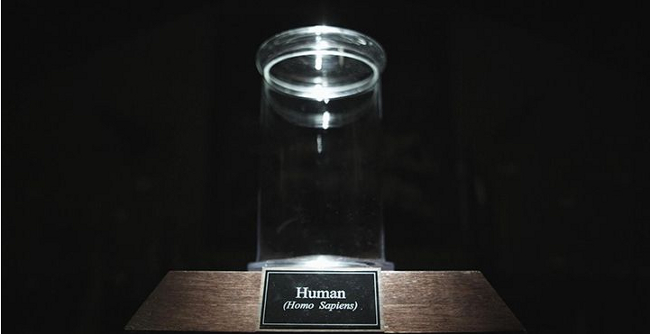
The Museum Awaits it's Final Mammal Specimen

The Museum Awaits it’s Final Mammal Specimen

If you thought Mrs. LanceAround was nervous about taking Grammy LanceAround to the film about gay senior citizens, you can only imagine how she felt about taking her to the documentary about the only [Editor’s Note: This film freely uses a word that is inappropriate for the family oriented LanceAroundOrlando blog, so we’ll just substitute this word instead] [Johnson] museum in the world.

Imagine our surprise when we got to the theatre and discovered that most of those lined up to see the movie were older patrons, with as many females as males.

This very well made documentary tells the story of the Icelandic Phallogical Museum in Husavik, Iceland, just 30 miles from the Arctic Circle. Directed by Jonah Bekhor and Zach Math, the film skillfully walks a fine line between the serious and the whimsical. Fortunately, it is very tastefully done, although inappropriate for all but the most mature audiences.

There were many times during the movie when LanceAround was almost convinced the entire movie was a spoof. Although Mrs. LanceAround never doubted the sincerity of the documentary, she would often lean over and whisper, “You’ve got to be kidding me.” But, no, an extensive search on the internet reveals that it’s both true and serious.

Most of the movie is spent chronicling the efforts of two men to become the first person to donate a human [Johnson] to the museum. One of them is a relatively famous Icelander who is over 90 years old. The other is a 50-something American who gets an American symbol tattooed onto his [Johnson] and is willing to arrange to make his donation prior to his death. Yes, you read that correctly.

The audience ran the gambit from some members who laughed out loud during almost every scene to others who took it all in with a look of bemused surprise.

While in the men’s restroom at the end of the film, LanceAround overheard one filmgoer quip, “That had to be the most bizarre film I’ve ever seen.”

Despite Mrs. LanceAround’s apprehension, Grammy LanceAround appeared unfazed. At the the end of the night she commented to Mrs. LanceAround and NumberOneSon, “Do you know who would have been the first person to do that (donate his [Johnson] to the museum)?”

“Your husband?” guesses LanceAround.

“Yes!” responds Grammy LanceAround, “Your Father.”

Too bad Dad passed away before he heard of this museum. Grammy is correct, he would have loved to have risen to the occasion of being the first human to have made a donation. (Sorry, couldn’t resist. Love you Dad!)

Levitated Mass – Day 4 FFF 2014

April 8, 2014 by
Just How Do You Move a 340 Ton Rock Down the Highway?

Just How Do You Move a 340 Ton Rock Down the Highway?

This is a story about…a rock…a VERY BIG rock…a rock that weighs 340 tons.

Renown land artist Michael Heizer, has found the perfect piece of granite. He creates an art piece at the Los Angeles County Museum of Art which displays the rock by “levitating” it above a ditch so museum goers can walk under it. Problem is, how do you move a very large rock 105 miles?

By raising 10 million dollars of private money, the artist is able to make this happen. It’s a surprisingly interesting, well paced, extremely well filmed documentary directed by Doug Pray, that literally puts you on the edge of your seat. By providing multiple viewpoints on the subject matter, it does an exceptional job of showing the many challenges, viewpoints and controversies surrounding this endeavor. How many local, county, state and national governments, zoning, utility and other organizations need to sign off on the final plan to move the rock? What if they are opposed to the project?

Perhaps one of the most memorable scenes in the film is when the transportation team is taking the rock through a distressed neighborhood and the people are all watching and wondering why they are down in their luck and out of work while someone is paying 10 million dollars just to move a rock.

By the end of the rock’s journey, the entire trip has become a celebrity in its own right as thousands of people line the roadway to catch a glimpse of the rock’s passage. In a festive atmosphere, those watching the rock parade provide hilarious, contemplative, insightful and down right weird commentary for the event. Was the government moving a secret military installation? Obviously no one would pay this kind of money just to move a rock!

Interspersed throughout the film are many examples of the artist’s other works. Turns out he’s been building large scale sculptures for over 40 years throughout the world.

The only disappointment with this film came at the end. After finally getting the rock in place at the museum, the filmmaker rushed the final shots, not allowing the audience time to simply view the work of art in its proper place. Otherwise, this film is exceptional and the LanceAround Team highly recommends it.

If we want to contemplate the rock a little longer, I guess we’ll just have to go to Los Angeles and see it for ourselves.

Fishhooks

Becca Barnet is a taxidermist. As a rule, she refuses to do pets because customers would expect the pet to be life-like. But that’s an impossible achievement for a taxidermist. However, when her two year old pet rat, Fishhooks, passes away, she decides to turn him into an art project–much to the amusement of the rat’s sister and Becca’s pet dog. Very short film, but just the right length. Gives one a lot to think about. You might never look at your pet in the same way again.


Ernest & Celestine – Day 4 FFF 2014

April 8, 2014 by
A Mouse, a Bear and Beautiful Handmade Drawings

A Mouse, a Bear and Beautiful Handmade Drawings

It’s easy to see why Ernest & Celestine was nominated for an Oscar for Best Animated Film this year.

Inspired by the popular series of children’s books by Belgian author and illustrator Gavrielle Vincent, this hand drawn animation is sweet, warm and cozy. It’s the perfect movie for children–of all ages.

Conventional wisdom holds that mice and bears cannot be friends. Celestine, a brave little mouse, challenges that wisdom when she meets the bear Ernest; despite the fact that the first thing Ernest wants to do is eat her.

Filled with many visual images and creative directing by Stephane Aubier, Vincent Patar and Benjamin Renner, this film envelopes you with warmth and tenderness. The American language version features the voice talents of Forest Whitaker, Mackenzie Foy, Lauren Becall, Paul Giamatti and William H. Macy. It has garnered rave reviews at film festivals throughout the world.

Gay & Grammy – Day 3 FFF 2014

April 7, 2014 by
How Would Grammy LanceAround Respond to This Movie?

How Would Grammy LanceAround Respond to This Movie?

As a septuagenarian, Grammy LanceAround grew up in a different generation than most people who attend the FFF. For this reason, Mrs. LanceAround was a little nervous about taking her to the film, Before You Know It.  The movie is a feature length documentary by P. J. Raval that chronicles the lives of three gay senior citizens who are facing the twilight of their years as they come to terms with what it has meant to be gay in a world that began for them with gays being labeled “deviant” or having a “mental disorder” to today’s American society that has seen a surge in the rights of gays to marry.

At the end of the movie, Mrs. LanceAround, NumberOneSon, NumberTwoSon and LanceAround all held their breaths as they asked Grammy LanceAround, “What did you think of the movie?”

“I loved it,” She replied.

“Whether you’re gay or straight, it doesn’t matter to me,” She continued. “I wasn’t crazy about the bar scenes, but I really liked everything else.”

I guess it’s no wonder that LanceAround has a very open and accepting philosophy of life.

“Do they really have retirement communities for people who are gay?” Grammy LanceAround innocently asks.

“Yes, Mom, this is a documentary. Everything in the movie is true,” Replies LanceAround.

“Well, that’s a good thing,” She responds. “It’s not good for people to be alone. I remember when I went into my community after Dad died. I met Fred. It was nice to have someone.”

And her simple wisdom, born of a time that has seen everything from the great depression to world war to the 60’s and footprints on the moon right up to today’s social changes, sums up the poignancy and power of this documentary.

Particularly touching was the story of Dennis/Dee, a gentle hearted widower, also a septuagenarian, whose family does not know that he likes to dress in women’s clothing. He has moved from his trailer in Florida to a gay retirement community in Portland, Oregon, because he can’t bare the thought of being rejected by what little family he has left if he were to come out to them. The scene, where he puts on his dress and make up then waits for an online date with someone who might become a sex partner, had many in the audience in tears.

When a black leader of the New York City Gay Pride Festival was being interviewed as the news breaks that gays would now be permitted to marry in the state of New York, the feeling of pride and elation in the audience was palatable.

As a movie, LanceAround was just beginning to think that the documentary was following a far too familiar formula which made it feel a little plodding and dull. But the story gradually emerged as so compelling that LanceAround became engrossed and totally unaware of the formulaic devices. In other words, the movie works. And it works on many different levels, as the applause of the audience at the end of the film clearly demonstrated.

Most of all, Grammy LanceAround loved it.

For No Good Reason – Day 2 FFF 2014

April 6, 2014 by
The LanceAround Family Highly Recommends This Documentary

The LanceAround Family Highly Recommends This Documentary

NumberTwoSon has attended Ringling College of Art and Design and The Art Department. He has met many artists and has seen a lot of documentaries about artists. So when he says For No Good Reason is the best documentary of an artist he has ever seen, it’s a Ringing endorsement. He was especially impressed with the production values–specifically the way the art was animated and presented.

While the iconic work of Ralph Steadman is some of the most instantly recognizable in the world of modern cartooning, the artist himself states that he is often dismissed as just a “cartoonist” and not seen as a “real” artist. That perception, if it is indeed true, is shattered by this spectacular documentary that chronicles his life and art. It feature Johnny Depp, who starred in the movie, Fear and Loathing in Las Vegas. Steadman was asked by Hunter S. Thompson to go with him to Las Vegas and help illustrate a story he was writing for Rolling Stone magazine. The resulting kaleidoscope of drugs and crazy adventures led to incredible art pieces and journalism that became known as “Gonzo” journalism. An article in Rolling Stone and the movie by filmmaker Terry Gilliam (who also appears in this documentary) helped to further heighten the notoriety of this remarkable artist. Before the film, I was speaking with a member of the Enzian staff and they said that, in some ways, Ralph Steadman was crazier than Hunter S. Thompson because he did all these antics while he was sober.

The documentary does an exceptional job of exposing the creative process that Steadman goes through when creating his works of art. Superior animation techniques then bring some of his artwork to life.

Through it all, the artist himself reveals a fascinating character who is modest and self-effacing in the light of a prodigious body of well respected work. His opening salvo, that his goal was to help change the world, was tempered at the movie’s end by his musings that perhaps he and his generation really failed humanity.

While Grammy LanceAround found the movie to be a bit confusing, Mrs. LanceAround, NumberOneSon and NumberTwoSon spent the entire car ride home discussing the movie in depth. It was clear that they were very touched by this chronicle of a man who created many iconic images for generations of Americans yet finds himself questioning his own contributions.

Very well done and worth seeing!


Shorts Program I – Day 2 FFF 2014

April 6, 2014 by
Elijah Wood Caps Off an Excellent Shorts Program

Elijah Wood Caps Off an Excellent Shorts Program

How do famous filmmakers become famous filmmakers? Many of them go to prestigious film schools that often require them to create a short film as part of their graduation thesis. They pour all their energy into this film, and perhaps many more like them, as they learn their craft. The FFF is inundated with hundreds of these short films which they then screen and select only the best for their audience. Of course, there are many filmmakers who make a career out of only creating short movies. But it is rare for shorts to appear at movie theatres.

For these reasons, the shorts programs at the FFF are often some of the most popular. Day Two was no exception as the Shorts Program 1: Perfect Day included seven shorts which Mrs. LanceAround, Grammy LanceAround, NumberOneSon and NumberTwoSon all agreed were top notch!

Fool’s Day
A fourth grade class decides to play an April Fool’s prank on their teacher. When it goes horribly wrong, the class is confronted with a real mess to clean up-before the police officer shows up for D.A.R.E. This dark comedy has some pacing and directorial issues, but was clearly an audience favorite as there was a lot of laughter throughout the film.

Pawn Shop Feels Like a Prison-Great Metaphor!

Pawn Shop Feels Like a Prison-Great Metaphor!

Cash For Gold
Very well made film about a desperate woman, a pawn shop, and a shopkeeper who struggles to find his conscience. Excellent productions values and very well directed. This one pulls at the heart strings.


The Bravest, The Boldest
Another very well made film. Once again there is excellent directing and great production values. This short film creates some very deep and moving characters in a short amount of time. Thoughtful and poignant.

ZZZZZZZ
A nighttime chronicle of a man and woman, with no dialogue, who seem to find very intimate beauty in the city streetscape. But are they dreaming? And what happens when they meet each other when they are awake? Fabulous images provide a romantic, artistic backdrop to this excellent short.

The Immaculate Reception
The most famous play in the history of the National Football League becomes the backdrop for two Pittsburgh teenagers making a play of their own. Period piece that does a great job of capturing a possible family scenario. Shot in 16mm, the home movie format adds a touch of realism making this film a true trip back in time for anyone who remembers that moment in history.

Milk and Blood
Father and son relationship are explored in this subtitled foreign language film. Yet another very well made film with wonderful production values that made it very enjoyable to watch. Although few audience members will be able to relate to the specific story of milking cows every morning, every father and son will relate to the difficulties in trying to work together with members of your family.

Setup, Punch
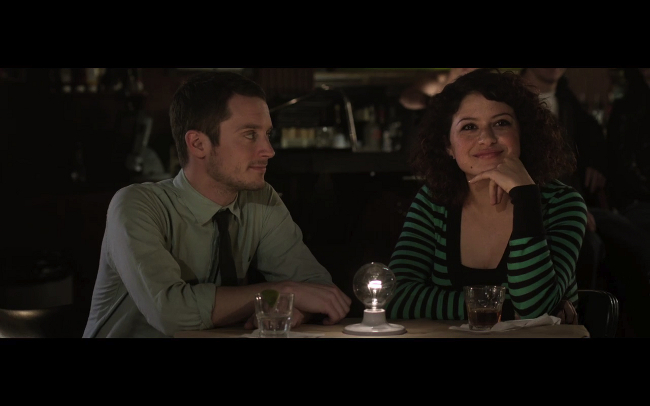
Amusing tale of a stand up comic who appears to struggle with the development of his professional career in accordance with his personal priorities. The title gives a little hint that this short may have some unexpected twists and turns for the both the comedian and the audience who watches him–both in the film and at the theatre! Stand out performance by Elijah Wood provides the added oomph that makes this film very memorable.

Filmmakers

At the end of the shorts, filmmaker Charlotte Glynn, writer and director of The Immaculate Reception and Alma Enriquez, one of the executive producers of Cash For Gold were available for some Q & A.

Charlotte was asked about the inspiration for her film. She sheepishly acknowledged that she was not even born when the famous football play occurred and, therefore [Spoiler Alert] did not lose her virginity on that day.  However, she acknowledged that after moving to Pittsburgh when she was 12 she gradually became immersed in the football culture and found beauty there.

Alma, from Cash For Gold spoke about how her movie creates a very real moment that many people can relate to during this period of economic unrest.